The Ultimate Space-saving Organisation Tips for Small Spaces
This guide covers the principles we actually apply when working in constrained spaces: how to approach the layout, where design attention should go, and which decisions create lasting, liveable results.
Small spaces expose bad design choices fast. There is nowhere to hide a poorly placed door, a sofa that's 20 centimetres too wide, or storage that looks chaotic the moment it gets used. Most space-saving organisation advice for small spaces skips past this entirely — it offers tips for managing the symptoms rather than solving the problem.
At Kaiko Design, we work with small apartments, terraces, and compact homes across Sydney constantly. And the question we hear most often isn't "what storage should I buy?" It's: "why does my space still feel cluttered even after I've organised it?" The answer, almost every time, is that the space hasn't been designed — it's been managed. That distinction matters.
This guide covers the principles we actually apply when working in constrained spaces: how to approach the layout, where design attention should go, and which decisions create lasting, liveable results.
The real problem isn't your square footage
Sydney apartments are getting smaller. The average new apartment is roughly a third smaller than it was thirty years ago, and the density of inner-city living shows no sign of reversing. But the spaces we work with that feel genuinely spacious and calm are rarely the ones with the most square metres.
What they share is clarity. A clear circulation path. Deliberate storage. Furniture scaled to the room, not borrowed from a larger one. The feeling of space is a design outcome — it doesn't come standard.
The mistake most people make when organising a small space is additive: they buy more storage, add more baskets, stack more boxes. Each individual solution is reasonable. Collectively, they create visual noise that makes the space feel smaller than before. Effective space planning begins earlier — before anything is purchased.
Plan the function before you address the storage
Every room in a small home has to work harder than it would in a larger one. A bedroom might also function as a workspace. A living room might double as a guest room. A hallway might be the only coat storage the apartment has.
Before addressing storage, map what the space must genuinely do — not what you'd like it to do ideally, but what it does on an ordinary Tuesday. That function list becomes the brief. Storage solutions follow from it; they don't precede it.
This is the phase where professional space planning pays dividends that no amount of clever containers ever will. Getting the layout wrong — circulation paths that clip furniture edges, a dining table that blocks the kitchen — means no amount of tidying makes the space feel good.
Vertical space: the design decision most people get wrong
"Use your vertical space" appears on every list like this. It's good advice, but it's treated too superficially. Placing a tall shelf against a wall adds storage. It doesn't automatically improve the space — and done without care, it can actively make it worse.
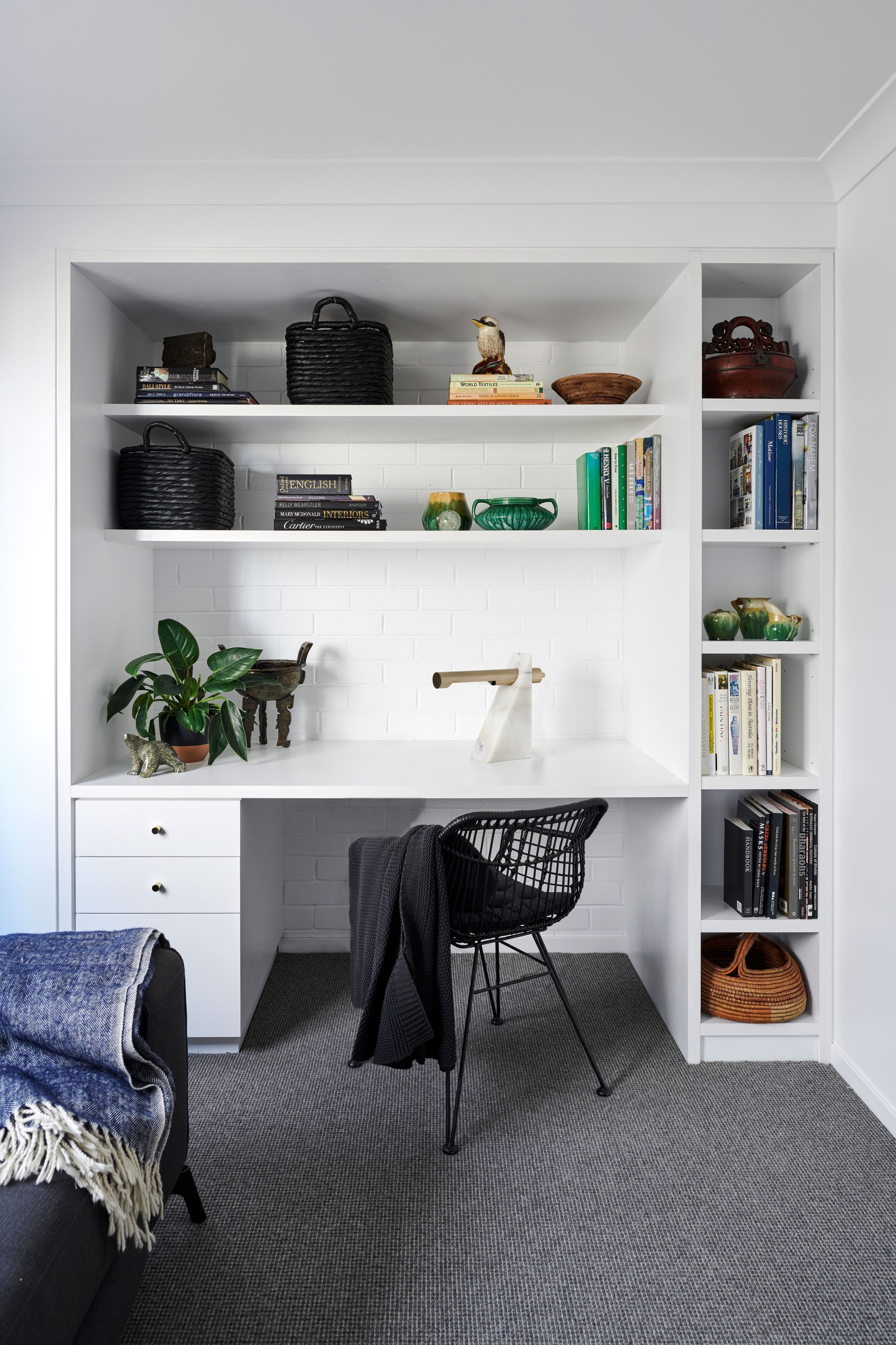
Vertical storage works when it's integrated rather than applied. Custom joinery built to ceiling height creates storage and draws the eye upward, making the ceiling feel higher. Open shelving at mid-height breaks the wall into zones without the crushing effect of floor-to-ceiling storage on every wall. The question is never just "can more fit up there?" It's "what does this do to the way the room reads?"
At Kaiko Design, we design built-in storage as an architectural element — not an afterthought. Custom-built storage solutions designed around a specific space and its specific occupant deliver a result that flat-pack simply cannot match. The room looks considered rather than packed.
Furniture selection: where most small-space mistakes are made
Scale is the most misunderstood aspect of small-space furniture. People downsize their pieces — smaller sofa, smaller coffee table, smaller dining set — then wonder why the room still feels crowded. Often the problem isn't size. It's the number of pieces and how much visual weight each one carries.
A single well-chosen sofa on legs, with visible floor space beneath it, reads lighter than a smaller sofa with a skirted base that cuts the room at ankle height. A dining table in glass or pale timber disappears into the room in a way that a dark wood table won't — regardless of their actual footprints.
Space-saving furniture done well is about choosing pieces with genuine dual purpose and visual intelligence — not just pieces that fold. A bed frame with integrated storage drawers removes the need for a separate chest of drawers. An ottoman with internal storage replaces both the coffee table and the blanket box. Each piece must earn its floor space.
Quantity matters too. In small spaces, restraint is an active choice. Three well-placed pieces outperform six mediocre ones every time.
The space-saving power of hidden storage
The visual noise of clutter — stacked books, visible cables, the washing pile that migrated to the hallway — is more damaging to a small space than any layout problem. The eye reads clutter as chaos, and chaos reads as constriction.
This is why hidden storage is the most powerful tool available. Not because it stores more, but because it removes the visual texture of mess from the surfaces the eye lands on first. A living room where everything sits behind flush joinery doors feels calm even when full. The same room with loaded open shelves feels maxed out even if there is technically space to spare.
The smart storage ideas we recommend most consistently are the ones that work with the architecture — under-stair storage designed as proper cabinetry, built-in window seats with lift-top storage, bed platforms with full-perimeter drawer runs. These are design decisions, not products. And they're the ones that hold up over years of actual use.
Light as a space-making tool
No amount of clever organisation solves a dark small space. Light is the most effective space-making lever available, and it's often the least expensive to optimise.
In compact rooms, the quality and direction of light matters more than raw quantity. A well-placed mirror doubles the apparent depth of a room. A sheer curtain allowing diffused light while maintaining privacy adds softness without closing the window down. Layered artificial lighting — ambient, task, accent — eliminates the flattening effect of a single overhead source that makes small rooms feel smaller than they are.
Our guide to illuminating small spaces covers the specific techniques we use across compact residential projects. It's worth working through alongside any storage or layout decisions.
Where organisation products actually belong — last
Baskets, drawer dividers, label makers, modular cube systems — useful tools. Not a design strategy.
The reason well-intentioned small-space organisation projects so often fail isn't poor product choice. It's sequencing. Products get purchased before the layout is resolved, before the storage type is determined, before it's clear what needs to live where. The result is a curated-looking version of the same problem: clutter shifted from surfaces into containers, not reduced.
The sequence that works: resolve the layout, design the storage architecture, then select the products that serve that architecture. In that order.
Why small spaces benefit most from a designer
The common assumption is that a designer is a luxury for large homes. Our experience is the opposite. Small spaces are where design decisions carry the most weight — because there is no room to absorb mistakes. A poorly sized joinery unit in a large home is a minor irritation. In a studio apartment, it defines the entire experience of living there.
Our residential interior design Sydney practice includes a significant proportion of apartments, terraces, and compact family homes across the city. The brief is consistent: make the space work fully, and make it feel like a deliberate choice rather than a constraint.
If you're working through a compact space — whether a full renovation or a single room that isn't functioning the way it should — understanding interior design fees is a practical first step. And if you'd like to talk through your specific project, we'd love to hear from you — book a discovery call to get started.